
Checking Criminal History in Wake County
A Wake County criminal record search works best as a series of checks. Begin with North Carolina eCourts and narrow a person search to Wake County criminal and traffic cases. A file number is more precise than a name. When only a name is known, test full and shortened forms, compare filing dates, and open each result. District Court entries can cover misdemeanors, infractions, and the first steps in a felony. Superior Court holds the later felony file. A matching name alone does not prove that the record belongs to the person you mean.
Remote results can omit an older document, a protected filing, or a paper exhibit. The clerk's public terminal at the Wake County Justice Center is the next step. Very recent custody may appear first in the Wake County detention tools. A person checking their own fingerprint-supported statewide record can use the SBI Right to Review. These sources answer different questions, so keep the case number, booking number, arresting agency, and disposition together as the search develops.
- Search North Carolina eCourts by a full name or case number, then filter to Wake County and the relevant case type.
- Open each possible match and compare the case date, court division, charge, and status instead of relying on a name alone.
- Check Wake County jail or booking data when the event is recent, and note the arresting agency shown there.
- Use the clerk terminal or paper file when the online docket lacks a document or final outcome.
- Request a certified copy or submit an SBI fingerprint review only when that official form of proof fits the need.
Wake County's Three Criminal Records
The same incident can create three records that never look identical. A booking entry is a custody snapshot. It may list the agency, intake charge, bond, housing site, and release status before a prosecutor has made a final charging choice. The clerk's case file follows what was actually filed in District or Superior Court. It adds hearings, pleas, orders, disposition, and judgment. The SBI Computerized Criminal History record is a fingerprint-anchored state compilation built from arrest cycles and dispositions reported back by courts.
This split explains many apparent conflicts in Wake County criminal history. A booking charge may be changed or dropped. A court dismissal can appear even when an old agency record still exists. A missing disposition may reflect a reporting delay rather than an open case. Read the court file for the judicial outcome, the booking entry for the custody event, and an SBI Right to Review for your own state repository record.
| Record | Main custodian | Best use |
|---|---|---|
| Booking entry | Wake County detention system | Recent custody, bond, agency, and release status |
| Court case file | Clerk of Superior Court | Filed charges, hearings, disposition, and judgment |
| SBI history | North Carolina SBI | Your fingerprint-supported statewide arrest cycles |
North Carolina Official Background Checks
North Carolina does not offer the public an SBI pay-per-name criminal history portal. The official public route is a subject-only Right to Review. A person has a local law-enforcement agency take a full set of fingerprints on an FD-258 card, completes the current packet, and mails the card with a $14 certified check or money order. SBI sends the North Carolina-only result to the subject by first-class mail. It does not accept walk-in delivery or send the response straight to someone else. The SBI Right to Review instructions show why a Wake County court-name search is not a state rap sheet.
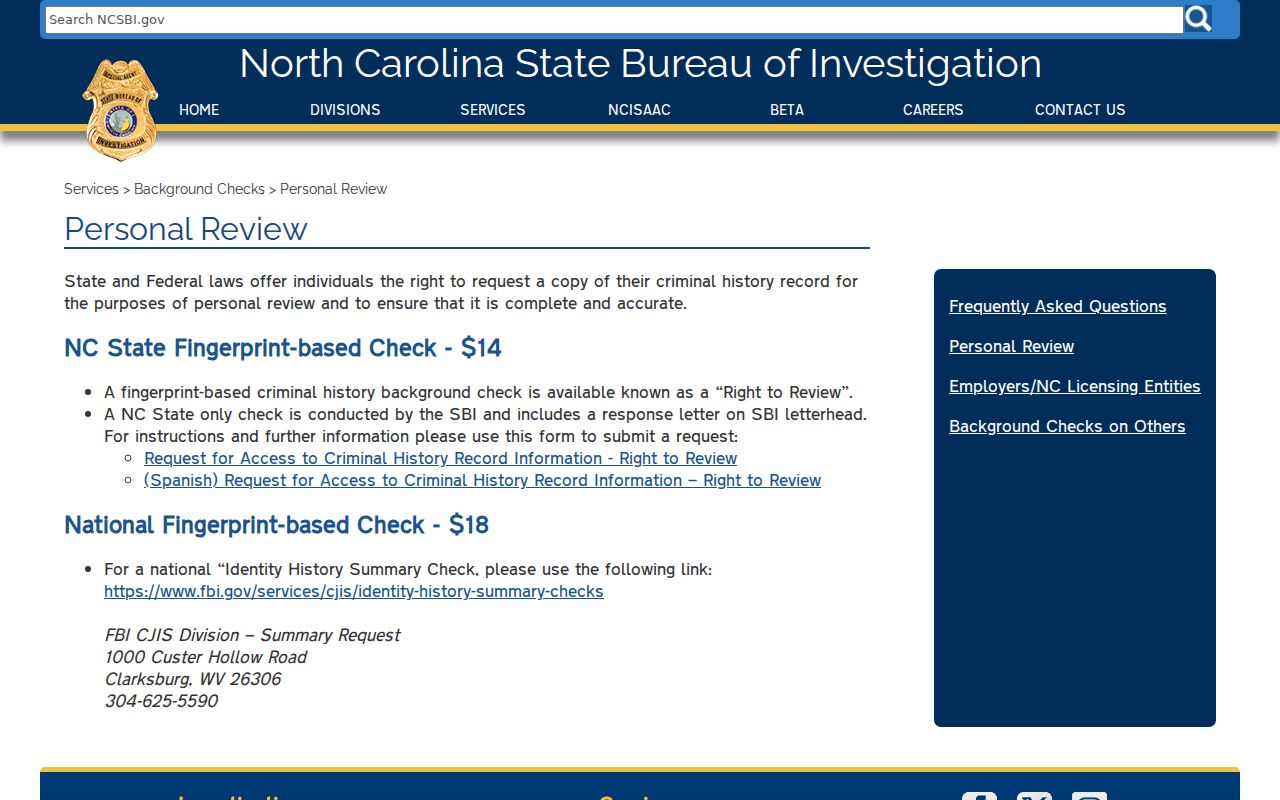
The page confirms the self-review route, its fingerprint basis, and the need to use the current mail packet. For a national self-review, use the FBI Identity History Summary instructions and its electronic request portal. That federal process remains separate from Wake County courts and the North Carolina-only SBI response.
| Service | Published amount | Public access |
|---|---|---|
| State fingerprint Right to Review | $14 | Available for a person's own North Carolina record |
| State and national fingerprint check | $38 | Limited to authorized statutory programs |
| State name check, if applicable | $10 | Limited to qualified agencies with an SBI agreement |
The SBI fingerprint rate page distinguishes the public self-review from restricted agency services.
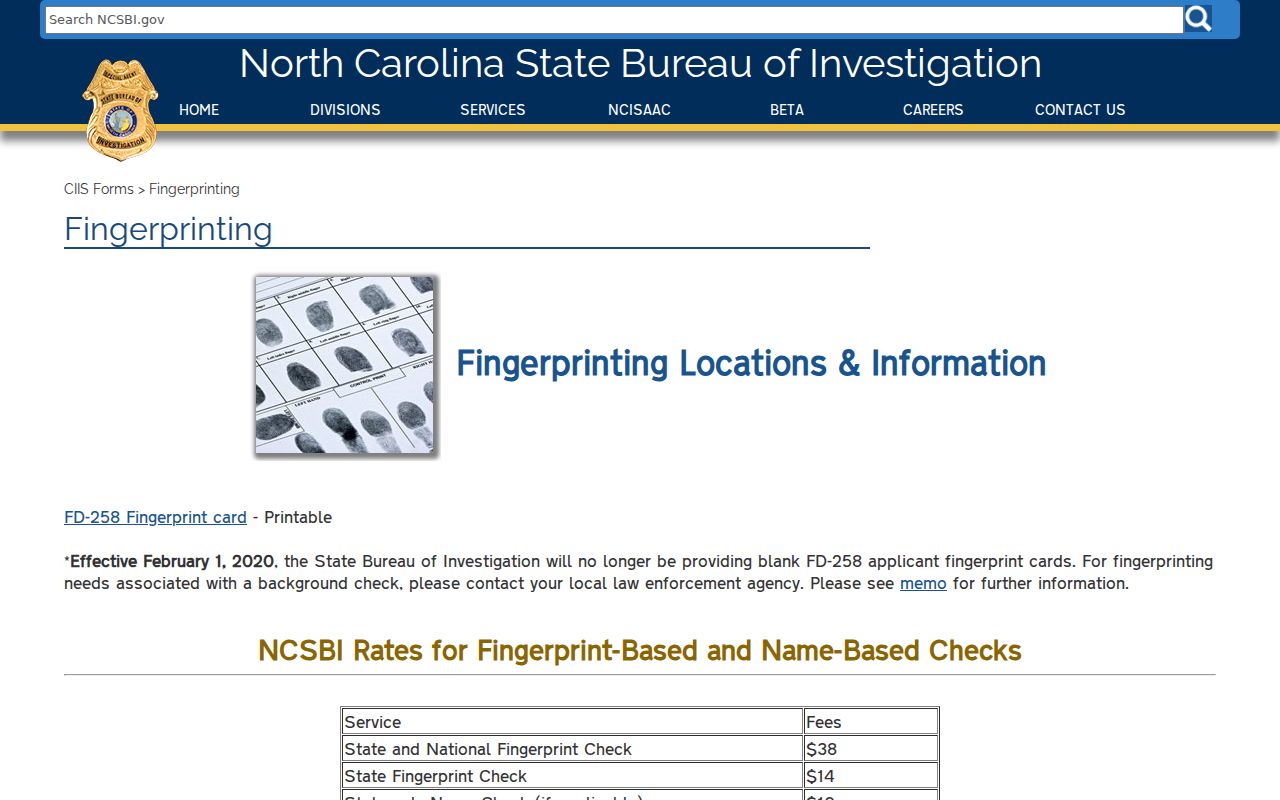
That distinction prevents a portal case search from being misread as a fingerprint check.
Wake County eCourts Record Search
Wake County joined the eCourts pilot in 2023, before the Odyssey system reached all one hundred North Carolina counties in 2025. The public portal is the fastest way to locate a state court case, but it is still an index and document-access tool. Use a case number when possible. For a person search, combine first and last names, try spelling variants, narrow the county, and use a filed-date range. Then read each register of actions for the current status and final disposition.
The North Carolina eCourts overview explains the statewide court system and its public services.
The overview helps place Wake County records within the same statewide platform now used by every county.
| Search field | How to use it | Why it matters |
|---|---|---|
| First and last name | Test known full and short forms | Names can vary across filings |
| Case number | Enter the full court file number | Points to one case instead of a list |
| County | Select Wake County | Removes same-name cases elsewhere |
| Case type | Choose criminal or traffic | Keeps civil files out of the results |
| Filed dates | Set a useful range | Narrows common names |
Note: Sealed, expunged, juvenile, and other protected data will not appear in ordinary public results.
Criminal Record Types
Wake County agencies create records at distinct points. Police and sheriff deputies write incident and arrest reports. Detention staff make booking records after intake. A magistrate or court filing starts the judicial case, which the Clerk of Superior Court keeps for both District and Superior Court. Fingerprints and arrest data move to SBI, while a final court disposition should later link back to that arrest cycle. NCDAC maintains prison and state supervision data. The Wake County Sheriff also registers qualifying sex offenders who live in the county.
Choosing the right custodian saves time. A Raleigh Police narrative does not move to Sheriff Records merely because the arrested person was booked at a Wake County facility. A returned warrant and judgment belong with the clerk. A county jail entry does not replace the state prison locator after transfer.
- Incident and arrest report: basic event facts from the agency that made or investigated the arrest.
- Booking record: intake, charge, bond, facility, and release data held by Wake County detention staff.
- Court case file: filed charges, docket events, orders, disposition, and judgment held by the clerk.
- SBI history: fingerprint-supported state arrest cycles with reported dispositions.
- Custody or registry file: NCDAC supervision and prison data or public sex-offender registration data.
Wake County Criminal Records Counter
Criminal case records are at the Wake County Justice Center, 300 South Salisbury Street in Raleigh. The clerk's criminal line is (919) 792-4300, while record checks and expunction questions use (919) 792-4325. Public hours are weekdays from 8:30 a.m. to 5 p.m. The older Wake County Courthouse at 316 Fayetteville Street is the civil venue. Going there for a criminal paper file is a common routing error. The official Justice Center listing identifies the building used for Wake County criminal matters.
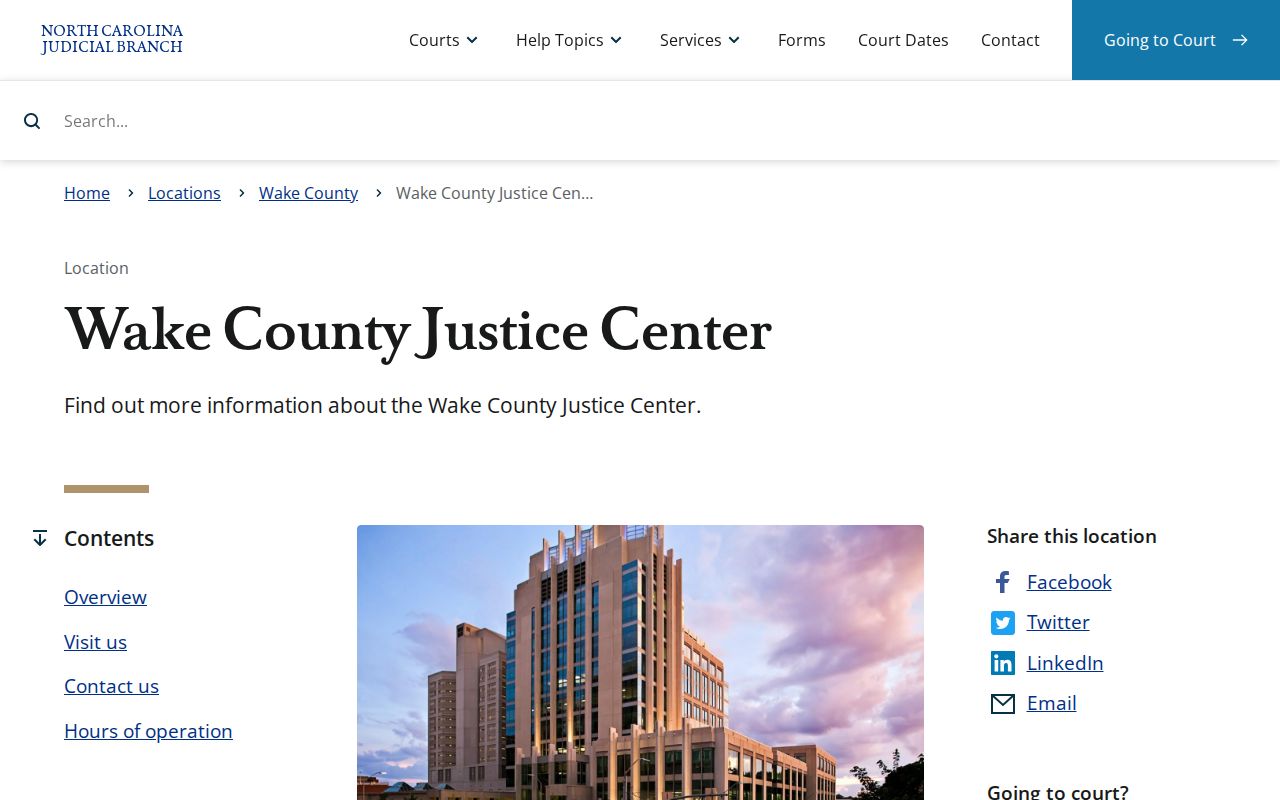
The court listing is the best source to recheck hours and visitor details before a trip downtown.
The Wake court contact directory separates the criminal, records-check, and expunction lines.
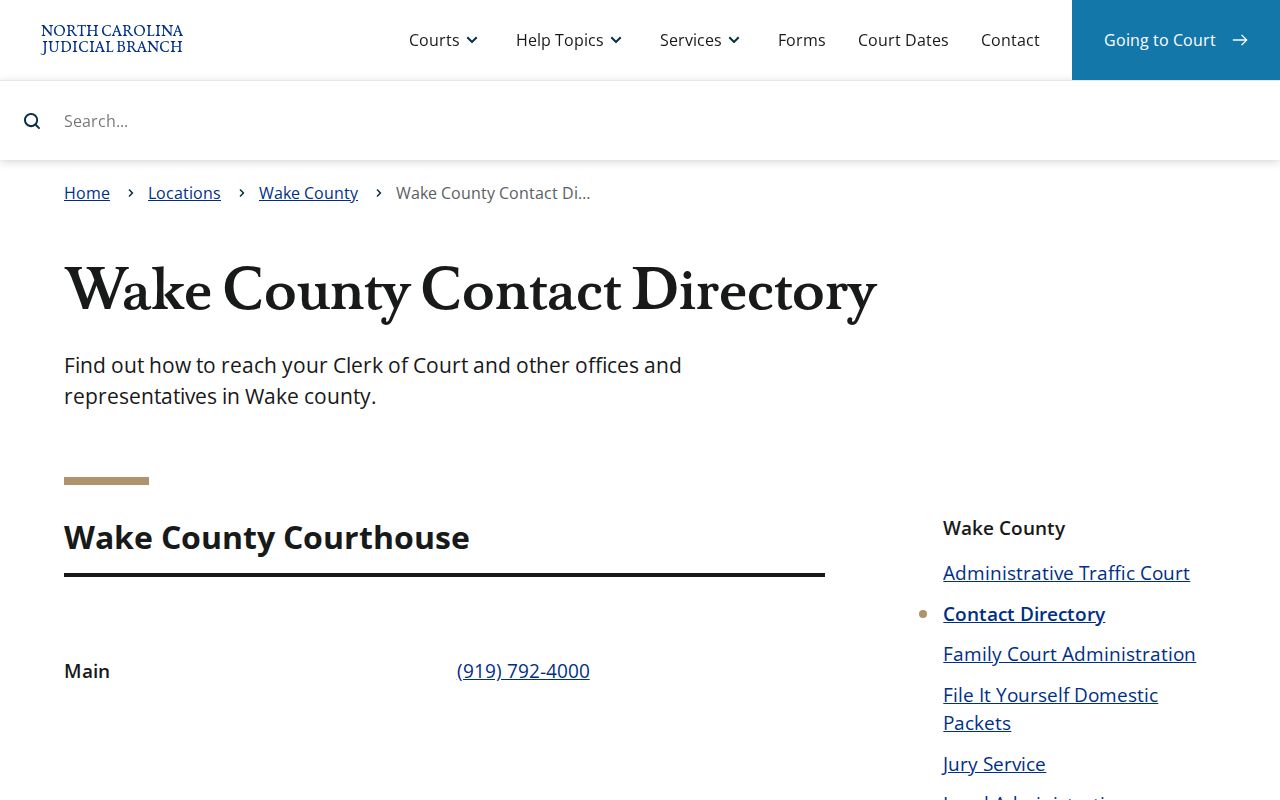
Those direct numbers are more useful for a missing file or copy question than the general switchboard.
Wake County Justice Center
300 S. Salisbury St.
Raleigh, NC 27601
(919) 792-4300
Weekdays, 8:30 a.m. to 5 p.m.
Sheriff Records Division
330 S. Salisbury St., Records S208
Raleigh, NC 27601
Sheriff.Records@wake.gov
Weekdays, 8:30 a.m. to 5:15 p.m.
Inside a Wake County Criminal Record
A Wake County criminal record should be read in context. A court file number and court division identify the judicial case. The charge line gives an offense description, statute, class, and alleged offense date. Docket events can show process, settings, continuances, pleas, and orders. The disposition states whether the charge was dismissed, produced a guilty finding, ended in a not-guilty finding, or moved elsewhere. A judgment can add costs, fines, restitution, a sentence, and probation terms.
Booking data is different. It centers on the intake event, booking agency, presented charges, bond, facility, and release. An SBI record centers on identity and fingerprint-supported arrest cycles. Always identify which of these records supplied a field before drawing a conclusion.
| Name and identifiers | Name, aliases, birth data, and an SBI or FBI number where held and public. |
|---|---|
| Arrest or booking | Event date, agency, booking number, initial charge, bond, facility, and release data. |
| Charge and statute | Offense text, legal citation, class, filing date, and court division. |
| Disposition | The outcome and date, such as dismissal, conviction, acquittal, or transfer. |
| Sentence | Active, intermediate, or community terms, plus public costs and conditions. |
| Supervision status | Probation, post-release supervision, or other NCDAC information when public. |
Wake County Warrant Record Checks
Wake County does not publish a complete live name list of active warrants. An eCourts event log may show that a warrant, summons, or order for arrest was issued, served, reset, or recalled, but it is not a guaranteed warrant check. Unreturned process can be restricted. Begin with the court case, then use the Justice Center terminal or ask the clerk for the available official record. Sheriff Records can address public law-enforcement information, while the police agency that began the case remains the source for its report.
An arrest warrant is a probable-cause order. A North Carolina order for arrest often follows a failure to appear or another statutory event. Search warrants can remain sealed. Updates after service or recall may also lag. Anyone resolving their own possible warrant should obtain current clerk confirmation and legal advice before appearing. A warrant cannot simply be assumed cleared because an old web entry changed.
Note: North Carolina eWarrants and Enforcement Mobile are justice-partner systems, not public Wake County search tools.
Public Access Laws in North Carolina
The North Carolina Public Records Law begins with broad access, but separate statutes define important limits. Clerk-maintained criminal actions are generally open during regular hours. Police investigative and intelligence files are different: specified incident and arrest facts can be released, while narratives, witness material, and investigative work may be withheld. Expunged, juvenile, sealed, and protected victim information is not part of the normal public view. Ask for a discrete record with a case or incident number, date, location, and desired format.
Custody controls the request path. Send a court file request to the Wake County clerk, a city police report request to that police department, and a sheriff incident or detention request to the sheriff. The county's NextRequest system can help when the correct Wake County department is unclear, but it does not transfer a city or state record into county custody.
Key North Carolina laws:
G.S. 132-1 and 132-6 define public records and the right to reasonable inspection and copies.
G.S. 132-1.4 limits access to criminal investigative records while preserving access to listed incident and arrest facts.
G.S. 7A-109 opens clerk records during regular hours unless another law restricts them.
G.S. 15A-146 governs many dismissed and not-guilty expunctions, including covered automatic processes.
G.S. 15A-151 keeps limited confidential expunction records for the uses the statute permits.
Wake County Supervision Records
Probation is not run by a Wake County department. It is state-run through NCDAC Community Supervision. Read the Wake County judgment first to see whether the court imposed probation. Then search NCDAC Offender Public Information by offender number or by a name narrowed with age or birth information. The result can show public conviction, sentence, incarceration, and supervision data, but it does not replace the court file or reveal an officer's private case notes. The NCDAC Offender Public Information search covers state prison and supervision records.
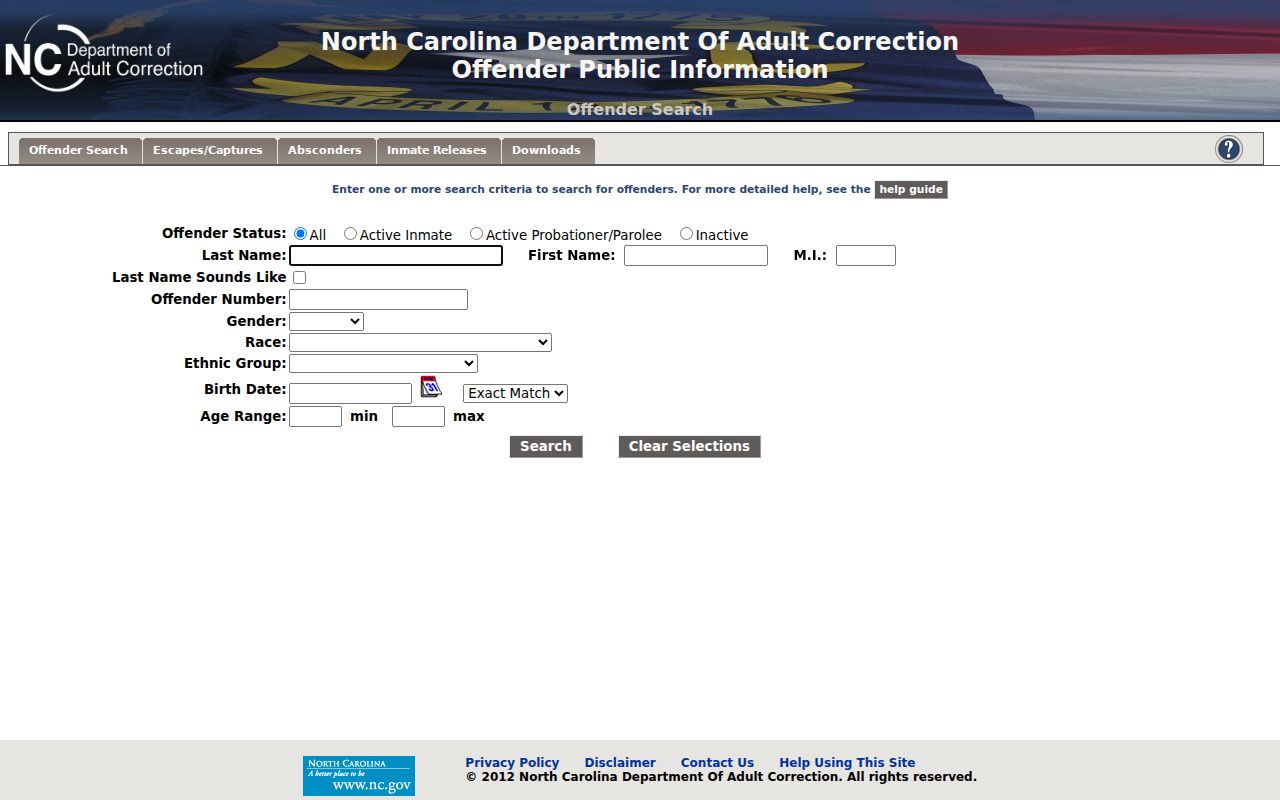
The locator should be used after the judgment identifies the kind of sentence or supervision imposed.
The NCDAC Community Supervision overview explains the state structure serving Wake County.
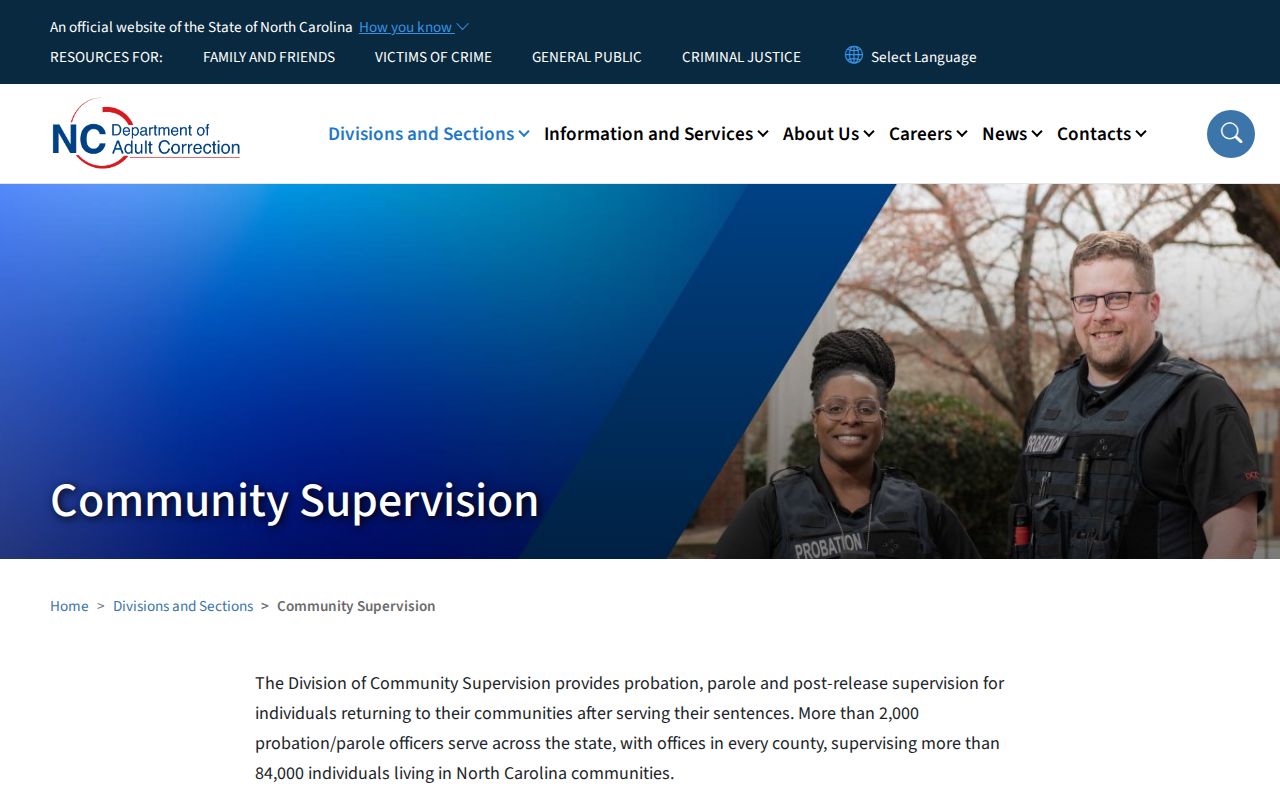
It also helps distinguish probation from post-release supervision and the narrower use of parole under older sentencing rules.
Sealed, Expunged, and Restricted Records
North Carolina calls record clearing an expunction. Eligibility depends on the exact statute and outcome. G.S. 15A-146 covers dismissals and not-guilty findings and provides automatic processing for many qualifying cases. G.S. 15A-145.5 addresses some misdemeanor and felony convictions with exclusions, waiting periods, and prior-record rules. Other sections apply to limited youthful offenses, identity theft, trafficking victims, and pardons. Juvenile files, sealed material, Social Security numbers, financial data, and protected victim information remain outside ordinary public access.
Petitions are filed through the Clerk of Superior Court in the county of the case. Wake County's record and expunction line is (919) 792-4325. Many conviction petitions carry a $175 fee, while specified dismissal and not-guilty routes do not. After an order, the clerk notifies agencies. A person should later compare eCourts with an SBI Right to Review because a court order and the removal of data from each linked system may not appear at the same time.
Wake County Booking Record Flow
The Hammond Road detention center is Wake County's arrest-processing hub. Intake staff create the booking entry, take fingerprints and a photograph, and connect the person with magistrate processing and release conditions. The sheriff's P2C inmate and recent-arrest tools can expose selected custody fields, while the arresting agency keeps its own incident narrative. Court staff later create a case when process or a charge is filed. Fingerprints and arrest data move to SBI, and the final disposition should return to the state record.
Wake County's two detention sites have a stated combined capacity of 1,574 beds. In 2025, the county detention center also became a site for NC RISE capacity-restoration care for defendants found incapable to proceed. That work can include psychiatric care, counseling, education, and case management. It affects the path of a pending case, but it is not a conviction or a separate charge.
The official NC RISE announcement describes the Wake County detention program.
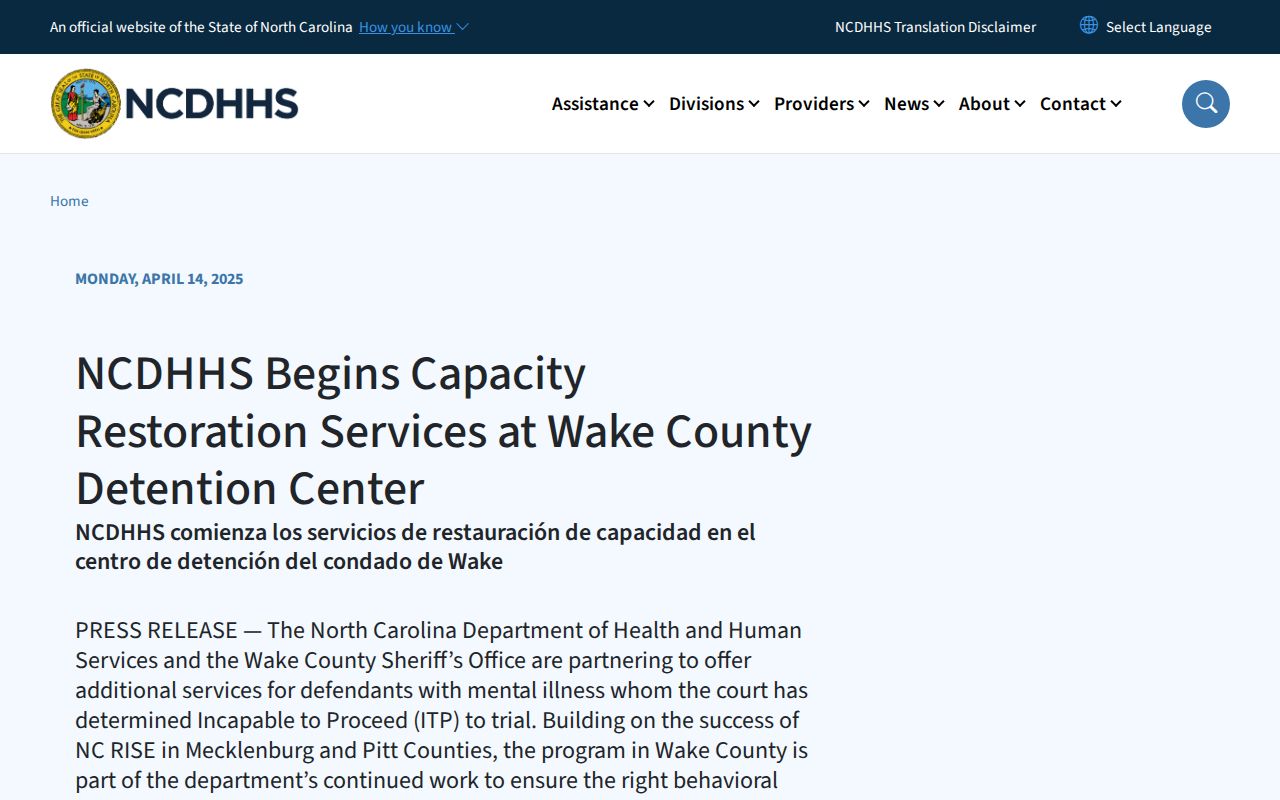
The program is a local example of how detention status and court competency proceedings can meet in one record trail.
Wake County Federal Criminal Records
Federal criminal cases do not appear in North Carolina eCourts. Wake County is in the Eastern District of North Carolina, and federal party or case-number research runs through PACER and the federal clerk. The Terry Sanford Federal Building and U.S. Courthouse in Raleigh holds local federal proceedings. Federal custody is also separate: the Bureau of Prisons locator does not replace Wake County detention or NCDAC Offender Public Information.
The Eastern District of North Carolina website supplies the official court and clerk information.
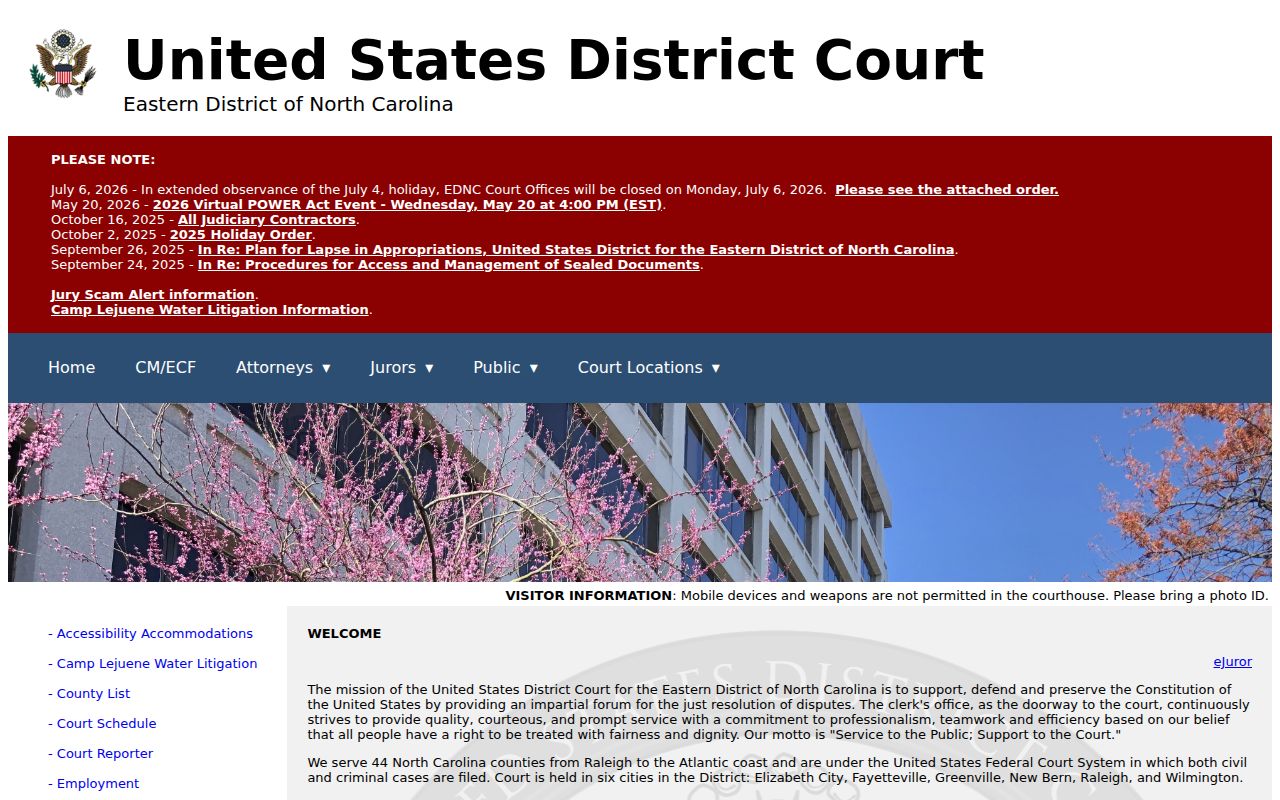
Search this federal layer only when the alleged conduct or case number points outside the state court system.
Wake County Criminal Records by City
Raleigh, Cary, and Apex are the three largest incorporated cities in Wake County by the state demographer's county-based estimates. Each police department keeps its own reports, even though criminal cases use North Carolina's unified District and Superior Courts. Raleigh offers direct police records channels and a crime map with category limits. Cary provides several request methods and a P2C search for selected reports. Apex has no working online search and relies on its records counter, email, mail, fax, and phone. None has a municipal court.
A city report may lead to a Wake County booking record and a county court file, yet it remains a separate agency document. The city pages keep that first link in the chain clear and show the local request method before routing the reader to county systems.
Raleigh Criminal Records
Raleigh Police reports, camera-record routes, and the path from city arrest to Wake County court.
Cary Criminal Records
Cary P2C and records-unit channels, with care for cases outside the Wake portion of town.
Apex Criminal Records
Apex's offline report process, voluntary form, and Wake County booking and court route.