
Wake County Arrest History
Wake County arrests come from the Sheriff's Office, municipal police departments, Highway Patrol, campus police, airport police, and other agencies with jurisdiction. Every person arrested in Wake is processed through the county's Hammond Road operation, where staff create the booking record, take fingerprints and a photograph, and connect the person with magistrate process and release conditions. The arresting agency still owns its incident report.
A Wake County arrest history is not one certified statewide file. The booking system records the custody event. The agency report describes the incident and arrest facts that law permits it to disclose. The clerk file shows what was ultimately charged and resolved. Fingerprint-supported data may also reach the North Carolina State Bureau of Investigation. A reliable review compares these layers and checks identifiers beyond a shared name.
Wake County P2C Arrest Records
The Sheriff's Police to Citizen system has separate discovery routes. Recent Arrests can show arrest time and place, agency, case number, charges, bond, and court details. The Inmates search focuses on people in Wake County custody and can include the facility, booking agency, release information, charge status, docket number, and court date.
The official Wake inmate search shows the fields used to narrow a Wake County arrest lookup.
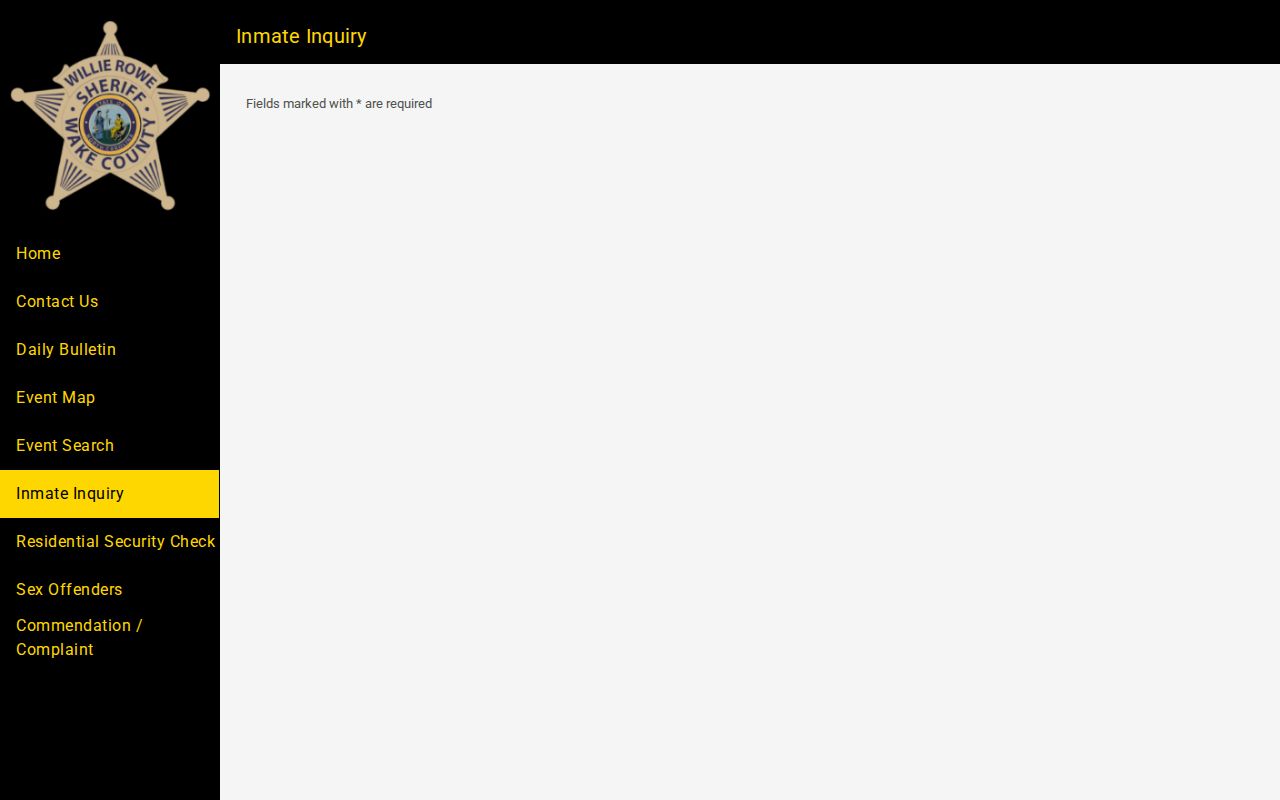
Last name is the practical starting point, while age and arrest date help separate people with similar names.
| Official view | Best use | Key limit |
|---|---|---|
| Recent Arrests | Find a recent booking and arresting agency | Discovery data is not proof of guilt |
| Inmates | Check current local custody, bond, and court date | Release or transfer can remove a person from the live roster |
| Agency report | Request disclosable incident and arrest facts | The creating police agency remains custodian |
Looking Up Wake County Arrests
No single channel answers every Wake County arrest question. Begin with the live county tools, then follow the agency, court, and fingerprint record. Keep the booking or report number, arrest date, name variants, charge, arresting agency, and court date as you move from one source to the next.
- Search Sheriff P2C Recent Arrests and Inmates by name variant and date. Save the agency, charge, bond, facility, docket number, and court date.
- Request the incident or arrest report from the agency that made the arrest. Sheriff Records accepts email, fax, or mail for its own reports.
- Search North Carolina eCourts for the filed Wake County case, then read its status and disposition. Use the Justice Center clerk terminal when remote details are missing.
- For a certified county name search, use the Bureau of Forensic Services mail route or in-person access. For one's own fingerprint-supported statewide record, use SBI Right to Review.
- If custody is unclear, call detention staff. For a county record with an uncertain custodian, use NextRequest and describe the exact record, date, place, and involved name.
Note: A Wake County name search is not fingerprint-confirmed, so compare case dates, agency, docket, and other public identifiers before matching a person.
Hammond Road Wake County Bookings
The Wake County Detention Center at 3301 Hammond Road in Raleigh is the operational hub for arrest processing, visitation, and bail bonding. It sits with magistrate and forensic identification functions, which links intake, identification, the release decision, and local custody. The Sheriff also operates detention space at the John H. Baker Jr. Public Safety Center. All visitation takes place at Hammond Road, regardless of housing site.
A booking profile may contain a photograph, formatted name, age, sex, race, height, weight, arrest date, expected release, court date, total bond, booking and arresting agencies, facility, primary charge, notes, physical traits, and release reason. Individual charges can carry a status, docket number, bond type and amount, and court date. Optional fields may not be exposed in every profile.
The official Wake Recent Arrests interface illustrates how Wake County presents the first custody snapshot.
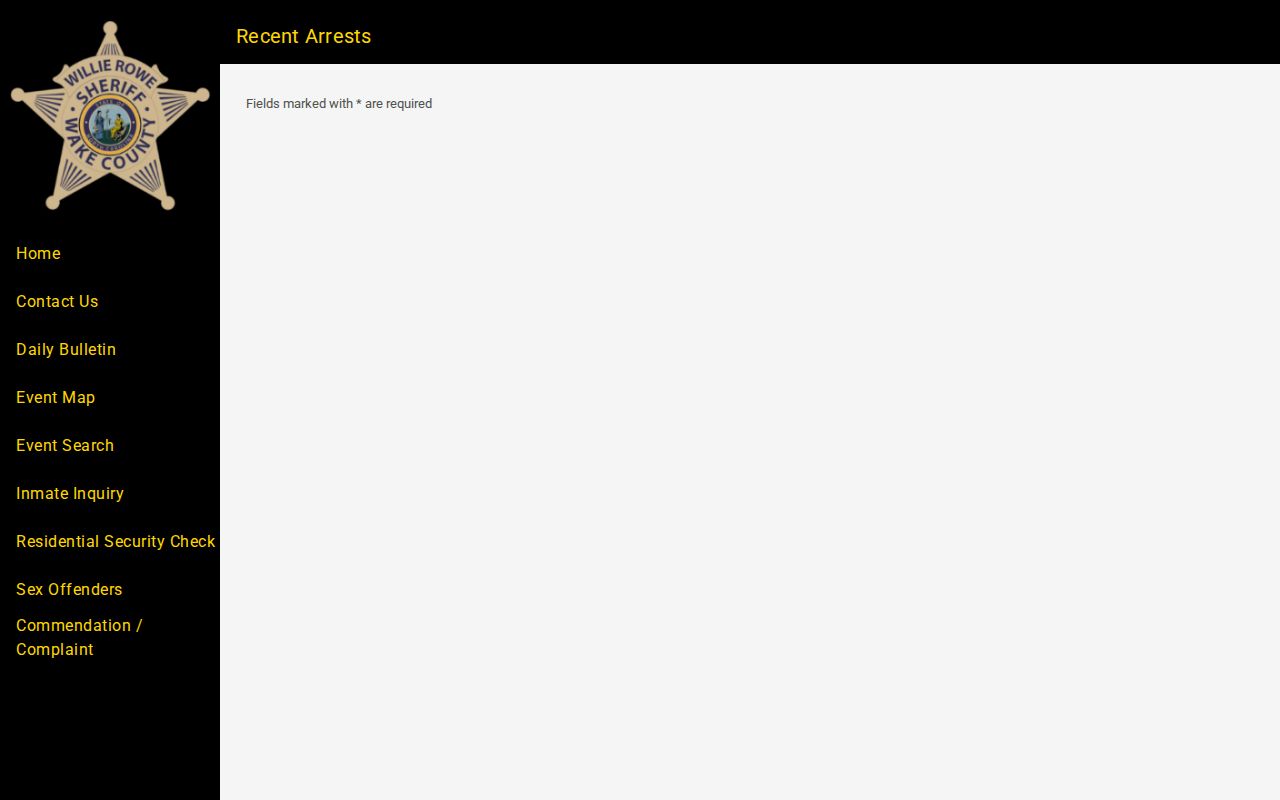
That snapshot can precede the filed case and should be checked again against the clerk's later disposition.
Inside a Wake County Arrest Record
A Wake County arrest record captures what happened at intake, not a judge's final decision. Searchers should use the agency and docket fields to connect the booking to its source report and court file. Bond reflects release conditions set at that stage. It is not a fine or a sentence.
| Name and aliases | Identity used at booking, with demographic details that may help distinguish similar names |
|---|---|
| Arrest date and place | When and where the arresting event occurred |
| Arresting agency | The police or sheriff's office that owns the incident report |
| Case and booking numbers | Identifiers used to connect custody, agency, and court records |
| Charges | Allegations presented at intake, which prosecutors may amend, replace, or dismiss |
| Bond and court date | Release terms and the next listed court setting |
| Facility and release | Local holding location and release or expected-release data where shown |
| Booking image | Identification image subject to Wake County's publication and access policy |
The primary charge can be a useful clue, but each charge line may have its own status, bond, and docket. Follow the docket to learn whether the allegation became a filed case.
Wake County Arrest Access After August
Wake County announced that its older mugshot and daily-arrest website would close on August 17, 2026. The county cited the way booking images can remain online after automatic expunction. This does not make the underlying public channels vanish. It changes which route a reader should use and makes the fallback chain more important.
After the planned shutdown, documented alternatives are the in-person workstation at 330 South Salisbury Street, the Bureau's mailed search, Sheriff P2C, and a request to the arresting agency. The historical Bureau system covered known Wake arrests from April 27, 2007, but that start date did not guarantee a complete history. Name matching was spelling-specific, so valid aliases and variations matter.
The Bureau of Forensic Services arrest-record page is the official source for the certified Wake County search route.
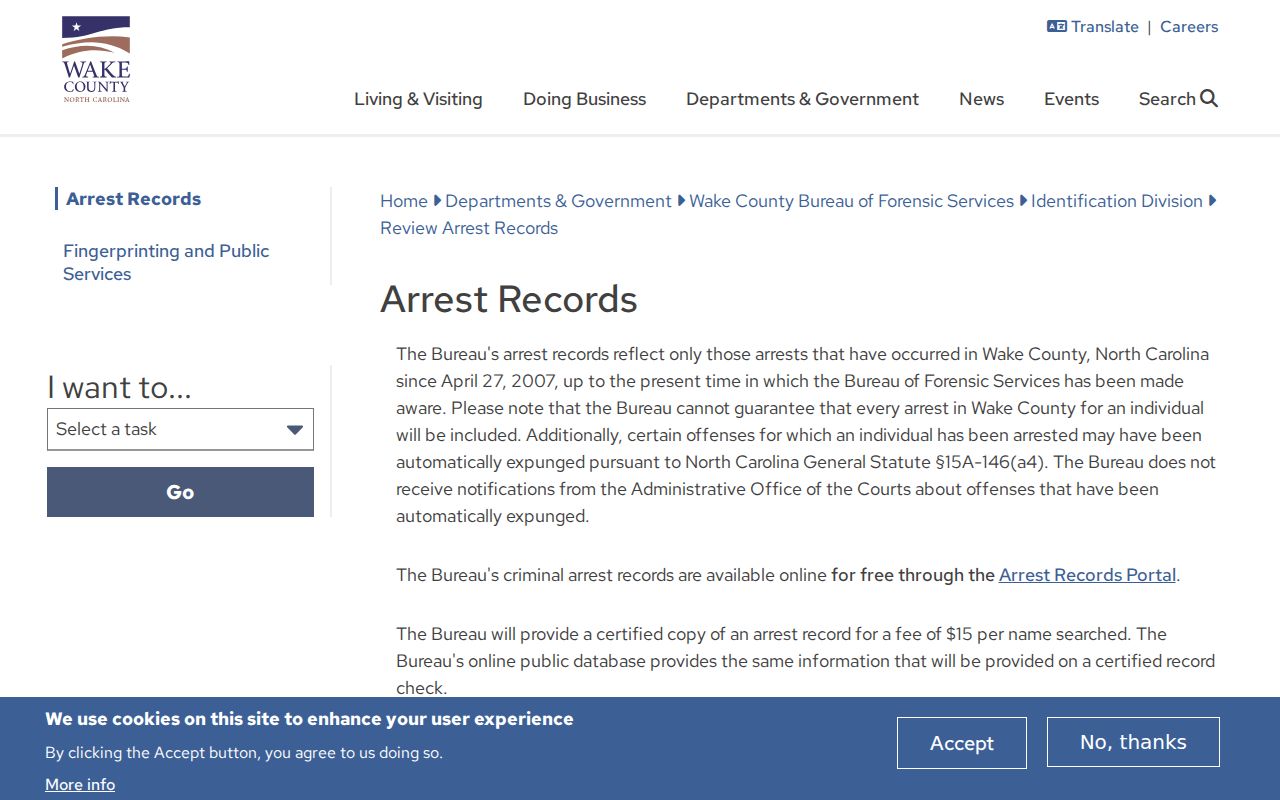
The Bureau mails results from its name-based search and warns that the result may not be complete or fingerprint-confirmed.
Booking Logs and Recent Arrests
A Wake County recent-arrest log can move faster than the court docket. It is useful for finding the arresting agency, time, location, charge listed at intake, bond, and scheduled court date. An inmate roster answers a different question: whether the person remains in local custody. Entries can change when a person is released, transferred, or the site updates.
Wake County does not promise that absence from either P2C view proves there was no arrest. Search spelling variants, try the arrest date, and check both recent arrests and inmates. Then use the agency report and eCourts file. A person sentenced to state custody may move to NCDAC Offender Public Information, which is distinct from the county jail roster.
Wake County Arrest Record Custodians
A Raleigh Police arrest can create records at three offices. Raleigh Police keeps its own incident or arrest report. Wake County creates booking and detention data. The Clerk of Superior Court maintains the filed criminal case. Asking Sheriff Records for the Raleigh narrative can fail even though the person entered the Wake detention system.
The Raleigh Police report instructions give the city records channels and direct contact.
Raleigh Records can locate a report by its number and callback details, while the Wake booking record remains with the county.
The same custodian rule applies across Wake County. Cary Police uses its P2C service, records email, phone, text, fax, and counter. Apex Police uses its records counter and voluntary F401b request form because its online report feature is unavailable. Garner, Wake Forest, Fuquay-Varina, Holly Springs, Morrisville, Knightdale, Rolesville, Wendell, and Zebulon police each keep the records their officers create. NC State University Police and RDU Airport Police do the same for their jurisdictions. Highway Patrol, State Capitol Police, General Assembly Police, and Wake Tech police can also be the source agency. Identify the badge agency first, then use the full Wake County criminal court case to check the filed charge and outcome.
Wake County Sheriff Arrest Requests
The Sheriff's Records Division is on the second floor of the John H. Baker Jr. Public Safety Center, Records S208, 330 South Salisbury Street, Raleigh, NC 27601. It accepts requests by email at Sheriff.Records@wake.gov, fax at (919) 743-7372, or mail. Hours are weekdays from 8:30 a.m. to 5:15 p.m. A mailed report request requires a $2 check or money order payable to Wake County Sheriff, with no cash.
Wake Sheriff Records Division
Records S208, second floor
330 S. Salisbury St.
Raleigh, NC 27601
Fax: (919) 743-7372
Weekdays, 8:30 a.m. to 5:15 p.m.
Bureau of Forensic Services
Attn: Arrest Records
3301 Hammond Road
Raleigh, NC 27603
(919) 856-6300
Certified name search by mail
Include the report number, incident date and time, location, involved name, record sought, contact details, and delivery preference. The official Sheriff Records page sets out these direct channels.
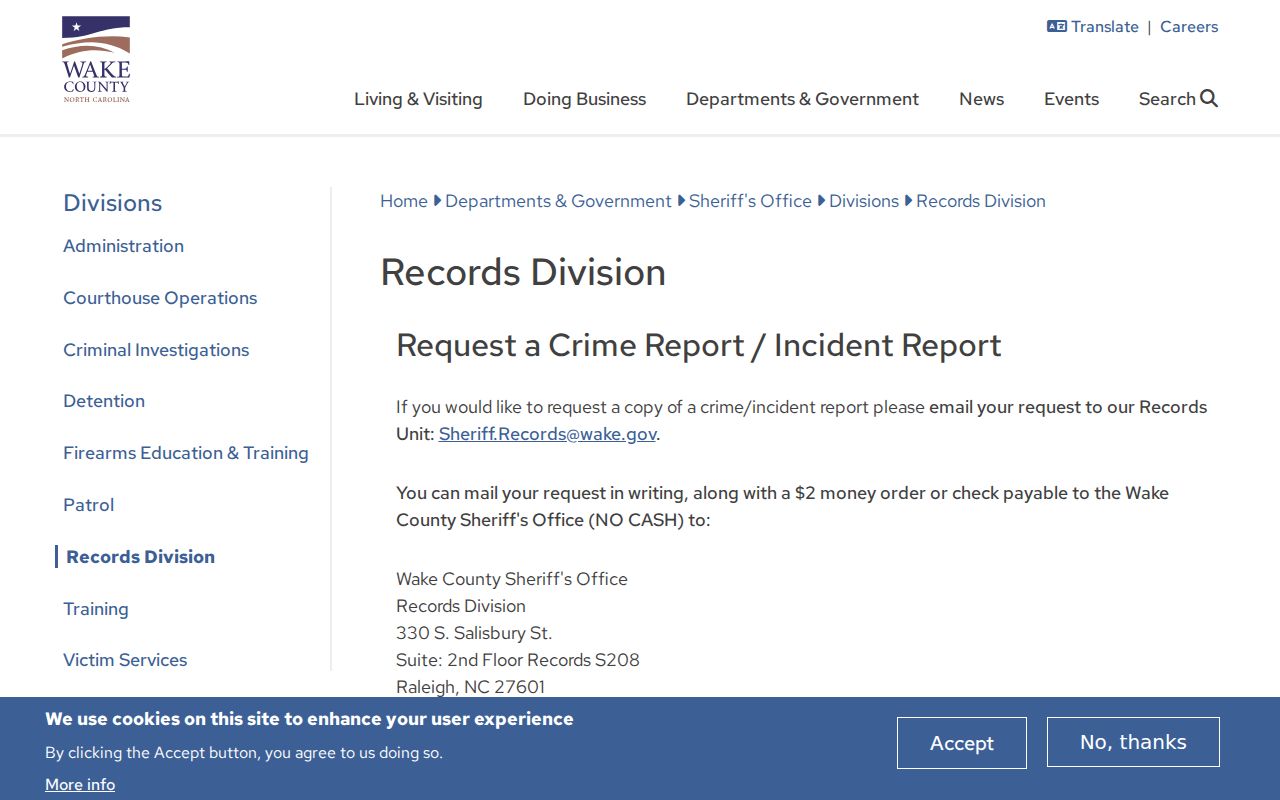
A direct Sheriff request is best for the agency's own report, detention record, or operation, not a city police narrative or court judgment.
The Bureau's separate certified consolidated search costs $15 per searched name. Mail the form and a check or money order to the Hammond Road address, or contact (919) 856-6300 or wcfs.arrestrecords@wake.gov. Research reports a one-to-two-business-day mailing process and coverage of Wake arrests known to the Bureau since April 27, 2007. It is name-based and is not guaranteed complete. For live detention questions, call the Wake County Detention Center at (919) 773-7930.
Wake County Arrests Reach SBI
At booking, fingerprints supported by arrest data are forwarded to the SBI Criminal Information and Identification Section. Courts later report dispositions, which SBI links to an arrest cycle. Delayed reporting, missing prints, name variations, expunction processing, or a charge that changed in court can make the records look inconsistent.
For one's own official North Carolina fingerprint-supported history, the SBI Right to Review process requires an FD-258 fingerprint card, application, and $14 certified check or money order sent by mail. There is no general-public SBI pay-per-name portal. The right-to-review file is also not a substitute for the Wake booking profile or the clerk's paper case file.
When the proper county custodian is unclear, the Wake County NextRequest portal accepts a description, department choice, requester contact, and attachments.
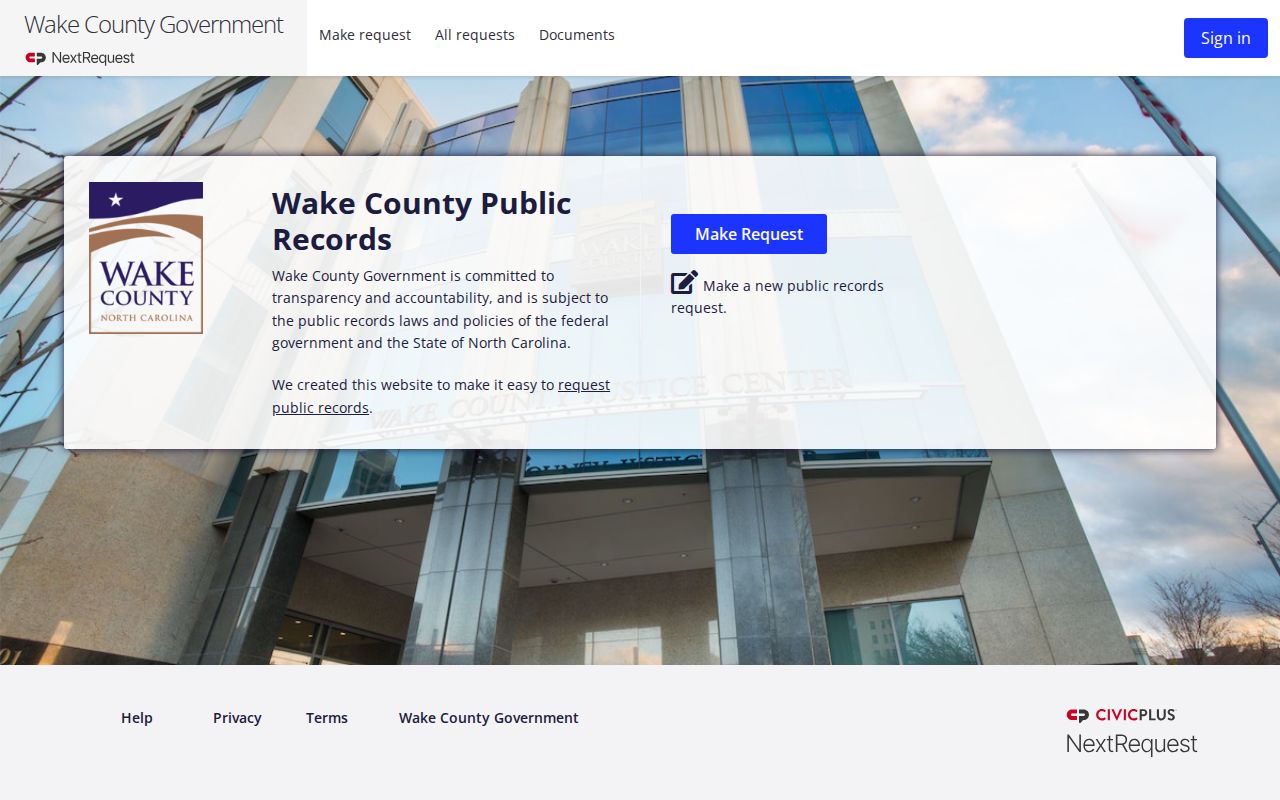
Use a precise request and route city reports directly to the city, criminal cases to the clerk, and Sheriff reports to Sheriff Records.
Arrests Are Not Convictions
An arrest shows that an agency took a person into custody or initiated the arrest process. It does not establish that prosecutors filed the same charge, that the person entered a guilty plea, or that a judge or jury found guilt. The Wake County court disposition answers the outcome question. A dismissal or acquittal can coexist with an older booking entry until lawful removal or system updates occur.
| Point | Arrest record | Conviction record |
|---|---|---|
| Created by | Arresting agency and Wake booking staff | District or Superior Court |
| Shows | Custody event, intake charge, bond, and facility | Finding of guilt, judgment, and sentence |
| Official source | Agency records, P2C, or Bureau search | Clerk file and linked SBI disposition |
| Possible next result | Release, no filed charge, amendment, or court case | Sentence, appeal, or qualifying expunction |
Note: A Wake County arrest is not proof of guilt, and many cases end in dismissal, acquittal, or a different filed charge.